
Every brain injury journey is different, and recovery can bring challenges, unexpected changes and moments of strength along the way.
We recently met Hugo Johnson at a networking event, where he shared his experience of having a brain haemorrhage and his journey of rebuilding his life, one step at a time. His experience also inspired him to set up a successful walking group for others who have been through similar traumatic experiences.
Through his own words, he offers an honest insight into the challenges of recovery, the progress he has made and what moving forward has meant to him.
We are grateful to Hugo for sharing his story with us and hope it offers encouragement, understanding and reassurance to others affected by brain injury.
Hugo’s Story: The warning signs
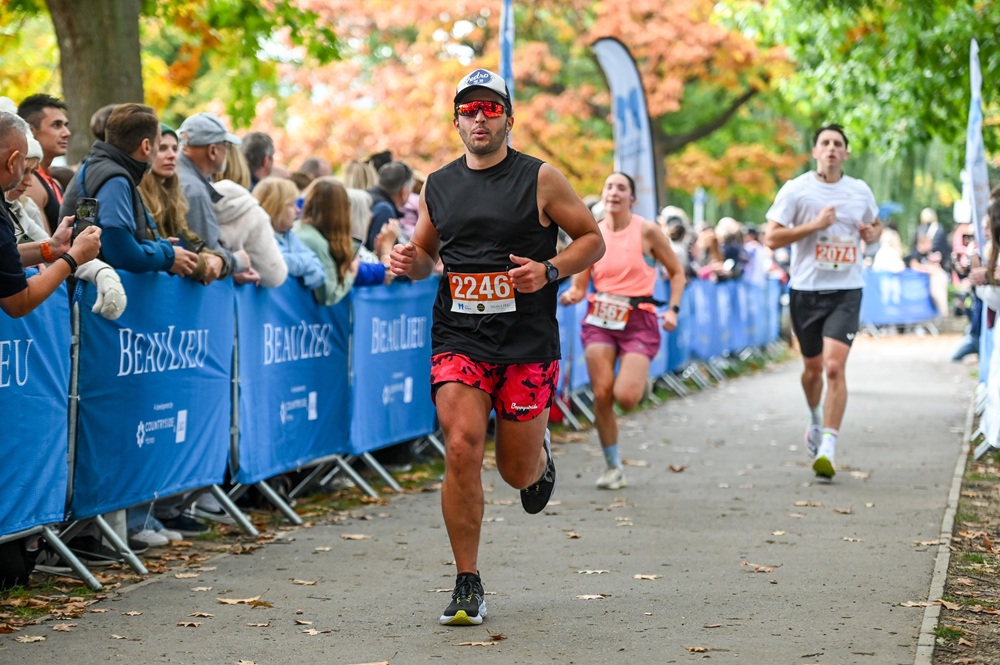
Just three or four weeks before my brain haemorrhage, I had completed a half marathon. I was fit, active and in great shape, with no real concerns about my health.
In the two weeks leading up to my hospital admission, I started experiencing tingling in my fingers. I can’t remember one particular moment when it started, but during one of my interval running sessions on the track, the sensation spread down my arm. It felt as though my arms had been put into concrete.
I booked a doctor’s appointment, but it wasn’t scheduled until the Friday. On the Wednesday morning, I called to see if I could be seen that day because I knew something wasn’t right and was becoming increasingly concerned. The earliest appointment they could offer was 11am, which I felt was too late.
The day before I was admitted to hospital, my symptoms became much more pronounced. I became increasingly clumsy and started struggling to eat and swallow. My mum described me as being almost as though I was drunk. That night, I had to sleep with my head propped up because I felt so strange.
The following morning, I woke my mum up and we rushed to A&E because I knew something was seriously wrong. I walked myself into hospital. I’d been sick, felt dizzy, had a strange sensation in my neck, tingling in my fingers and difficulty swallowing. In A&E, my heart rate had dropped to just 35 beats per minute. They initially tried to send me home with Vertigo but I asked to be reassessed and for a second opinion.
I didn’t fully appreciate how serious things were, as I still had no idea what was wrong. I was also struggling to remember parts of that day.
Losing the person I was
My hands were affected first, followed by my feet and legs. I then started losing my speech, vision, ability to swallow and ability to carry out basic tasks for myself.
Each day, I lost more and more strength. Within just a few days, I felt as though I had become a shell of the person I had been.
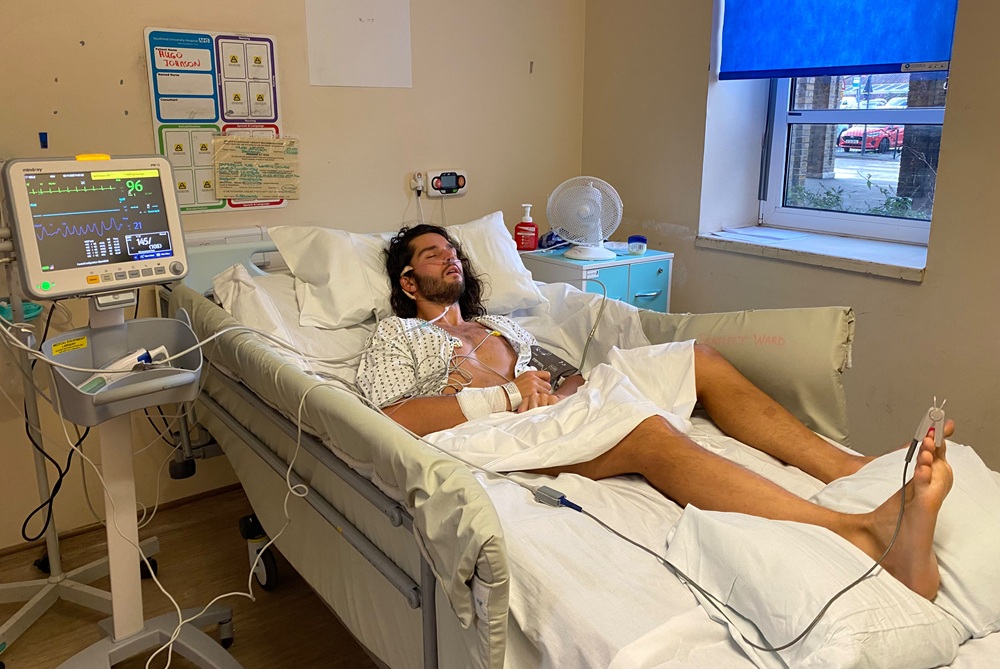
At first, I was walking myself to the toilet. I was then taken to the toilet in a wheelchair, but I insisted that I could manage by myself. Within a day or two, I could no longer lift or move my body and became completely bedbound. This lasted for around a month.
I was losing the ability to speak, my vision got blurry and I was struggling to swallow. I had to eat puréed food for five weeks before I could be reassessed. I began refusing to eat because I found the food so awful. Anyone who knows me knows how much I love my food, so this was completely out of character.
Over the following weeks, I also battled three infections: pouchitis, salmonella and a urinary tract infection. My resting heart rate would rise to 180 beats per minute while I was lying in bed, and my temperature reached almost 40°C.
It was an incredibly frightening period for me and my family, and my life had changed almost overnight.
I was so fortunate to have my family there for me every day. Honestly, if they hadn’t been, I’m not sure I would still be here today. There were days when my heart-rate monitor would show no pulse, and days when the whole team had to be called into my room. The medical team told me that my age and fitness is what kept me alive.
I spent seven weeks at Southend Hospital, including the Christmas period, followed by three weeks at Northwick Park Hospital. Luckily, I was able to go home for Christmas Day to see my family and my dog. That’s all I wanted.
The fight to recover
After around four to five weeks, I gradually began learning to move my body again. Eventually, I was able to stand using aids, with numerous physiotherapists supervising me. I was incredibly determined.
As someone who has always been active and loved sport, I was extremely motivated to get as much of my independence back as possible. I did everything I was asked to do in rehabilitation, and more. Eventually, I was able to shower myself and brush my teeth and hair.
I was transferred to Northwick Park Hospital for physiotherapy, where I worked towards getting back on my feet and walking independently.
But just as I was beginning to make progress, another challenge emerged.
A follow-up MRI raised the possibility of an AVM or cavernoma, but I was never formally diagnosed with either. To this day, doctors have been unable to tell me exactly what caused my brain haemorrhage.
Because of the potential risk of another bleed, I was no longer able to continue physiotherapy or increase my physical activity. Everything had to stop.
After three weeks at Northwick Park, I was discharged. I went home with strict instructions not to raise my heart rate above 110 beats per minute and to check my blood pressure every morning and evening.
For someone who had previously completed half marathons and triathlons and loved pushing themselves physically, this was incredibly difficult to accept. I had worked so hard to regain my independence and start walking again, only to find myself facing more uncertainty about what I could safely do.
I was essentially restricted to walking, and this remained my situation until June 2026. Following an angiogram, I was given the go-ahead to begin introducing light exercise back into my routine.
However, the uncertainty remains. I’m currently waiting for a second opinion from Sheffield Hospital, with further scanning planned for around a year after my hospital admission.
Living with so many unanswered questions has been difficult, particularly when exercise has always been such a big part of my life. But I’m determined to keep moving forward within the limits of what is safe for me.
Feeling alone after hospital
One of the hardest parts of my journey has been navigating life after leaving hospital.
I often feel alone, with minimal contact regarding aftercare, further scans, next steps, physiotherapy and therapy. I found myself reaching out to charities, including SameYou and the Natalie Kate Moss Trust, to seek support and guidance.
I have also been heavily reliant on my family to assist me with self-care and drive me to appointments an hour away from home.
At that point, I felt I was having to search for help myself rather than having a clear pathway to follow, which is what the hospital said they would provide after I was discharged.
Recovering from a brain haemorrhage doesn’t simply end when you leave hospital. There is so much to navigate physically, mentally and emotionally, and it can be difficult to know where to turn, especially as a younger survivor.
I want to help raise awareness of this side of recovery, too, because the support people need doesn’t stop at discharge.
Finding a new purpose through In Motion Club
In May 2026, I started In Motion Club, a walk & talk group based in Southend.
I had missed the social side of exercise, seeing my friends and simply being part of something. So I thought, why not create my own group?
The idea was simple: bring people together to walk, talk and connect without judgement or pressure.
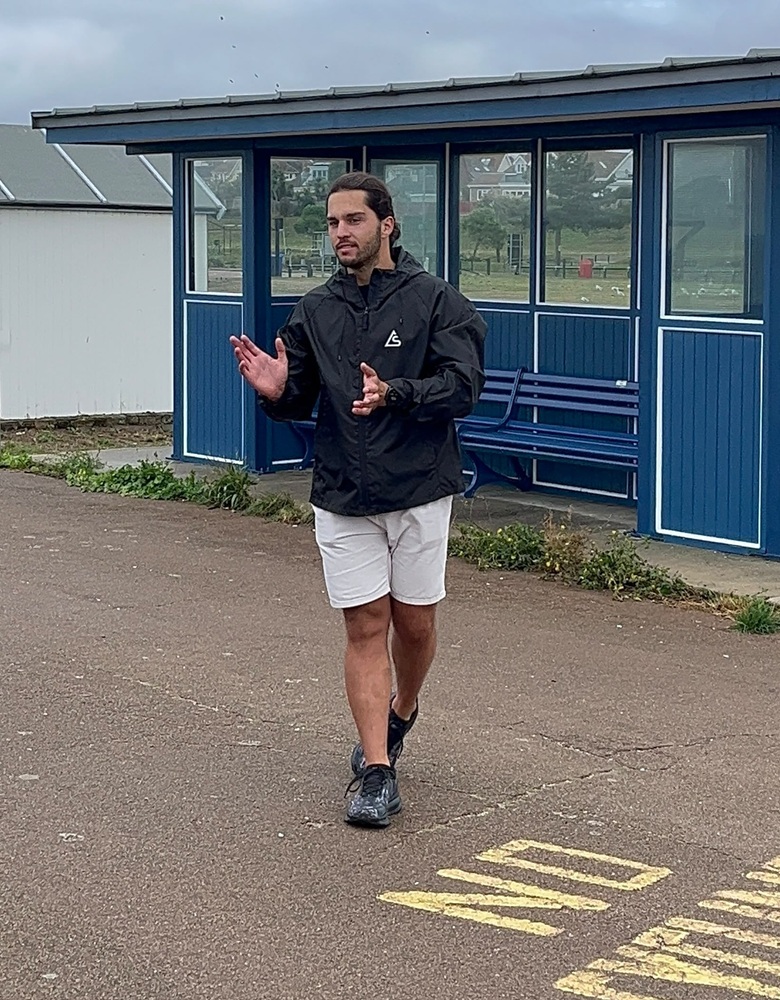
I never expected what happened next. My first video about the group reached 125,000 views on Facebook, and we gained around 1,500 followers in just three weeks.
Around five months on, In Motion Club has grown to more than 3,200 followers. I have been featured in the Evening Echo, Yahoo News and interviewed on BBC Radio in Chelmsford.
What started as a way for me to reconnect with something I loved has grown into something much bigger. It has given me a new purpose and shown me that even when life takes an unexpected turn, it is possible to build something meaningful from the experience.
My determination to get back to 100%
I wouldn’t say I’m back to normal, but I’m doing everything I can to rebuild my life and find a new sense of normality.
I was once told by a nurse that getting back to 100% was unlikely. From that moment, I made it my goal to prove that the future is not always set in stone.
I want to get back to 100% — if not even better than before.
I understand that recovery is different for everyone, and I am extremely fortunate to be alive and able to challenge myself again. I know there will be challenges along the way. But I refuse to let someone else’s expectations define what I believe may be possible for me.
My goal is to share my journey online, help others feel less alone and hopefully inspire people who are facing their own challenges to believe in themselves and keep rebuilding, one step at a time.
I also have some big ambitions. I want to follow in my mum’s footsteps and run a marathon. Eventually, I am going to complete a full Ironman.
I don’t know exactly what the road ahead will look like, but I know what I’m working towards.
My life changed dramatically in a matter of days. I’m still recovering, still learning and still finding my way forward.
But I’m here, I’m moving forward, and I’m not giving up.
If you’d like to learn more you can find Hugo on Instagram and TikTok at @hugo.in.motion, or join him in person at an In Motion Club Walk & Talk in Southend.
You can find more information about the group on In Motion Club – Southend Facebook.
